ABC Home




 In This Article
India's specialised investment fund market has expanded rapidly since it was introduced. The total assets under management of SIF strategies increased by 29% from ₹13,814 crore in May 2026 to ₹17,858 crore in June 2026. (The Economic Times)
Within this segment, the equity long-short category had nine schemes, 14,841 folios and assets worth ₹2,225 crore as of 30 June 2026.
These numbers indicate increasing investor interest. However, an equity long short fund is a relatively complex, market-linked product and should not be treated as a substitute for every traditional equity fund.
What is an Equity Long Short Fund?
An equity long short fund is an investment strategy that can take both long and short positions in equities.
A long position is taken when the fund manager expects a stock to appreciate. A short position, generally created through permitted derivative instruments, may be taken when the manager expects a stock or market index to underperform.
In India, such strategies are offered under the SIF framework. A SIF sits between conventional mutual funds and more complex portfolio structures by providing greater investment flexibility within a regulated framework.
Although people sometimes refer to these products as long-short equity mutual funds, a SIF is a distinct investment category with its own eligibility, risk-management and disclosure requirements.
Portfolio Balancing
The long portfolio provides participation in selected equity opportunities. Short positions may reduce part of the portfolio's market exposure or express a negative view on particular stocks or indices.This balance does not eliminate risk. The fund can still experience losses if its long selections underperform, its short positions rise in value, or its hedging strategy does not work as expected.
How Does a Long Short Equity Investment Strategy Work?
A long short equity strategy starts with research-led stock selection.
For example, the manager may buy shares of a company expected to perform well and create a short position in another company expected to underperform. Returns then depend partly on the difference in their performance.
The portfolio may also use index futures or options to reduce broad market exposure. If equity markets decline, gains from some short positions may partly offset losses in long holdings, depending on the market and the effectiveness of the strategy.
However, short positions can also reduce returns during a strong market rally. Derivatives introduce additional risks, including leverage, liquidity, basis, counterparty and execution risks.
Key Features of an Equity Long Short Fund
The following features explain how an equity long short fund manages its market exposure, portfolio risks and investment opportunities across different market conditions.
Active Portfolio Management
The portfolio is actively monitored and adjusted according to company fundamentals, valuations, market trends and risk conditions. Its success depends considerably on the fund manager's research and execution.Lower Net Market Exposure
Net exposure represents long exposure after adjusting for short positions. Compared with a fully invested long-only equity portfolio, a long-short fund may maintain lower net equity exposure.Hedging Against Volatility
Derivative positions may be used to hedge selected market risks. Hedging can help cushion part of the downside, depending on market conditions, but it may not protect the portfolio from every correction.Diversified Equity Portfolio
The strategy can invest across several companies and sectors while combining directional and hedged positions. Diversification may reduce concentration risk, although it cannot remove market risk.Suitable for Different Market Cycles
The manager can adjust long and short positions as conditions change. This flexibility may help the strategy respond to rising, falling or range-bound markets. Actual outcomes will depend on stock selection and portfolio positioning.Potential Benefits of an Equity Long Short Fund
An equity long short fund may offer:
 Participation in selected equity growth opportunities
- Some ability to benefit from relative underperformance through short positions
- Lower dependence on a continuously rising market
- Greater flexibility than a conventional long-only equity strategy
- Portfolio diversification through differentiated return drivers
Taxation of Equity Long Short Funds
Taxation depends on whether the strategy qualifies as an equity-oriented fund under applicable income-tax rules.
Where the required domestic equity exposure is maintained, units sold within 12 months are generally treated as short-term capital assets. Short-term capital gains are currently taxed at 20%. (IncomeTaxIndia)
Units held for more than 12 months generally qualify for long-term treatment. Long-term capital gains exceeding the aggregate annual exemption of ₹1.25 lakh are currently taxed at 12.5%, without indexation. Applicable surcharge and health and education cess may be added. (IncomeTaxIndia)
Tax rules may change. Investors should review the investment strategy documents and consult a qualified tax professional before making a SIF investment.
How Can the Apex Equity Long Short Fund Fit into Your Portfolio?
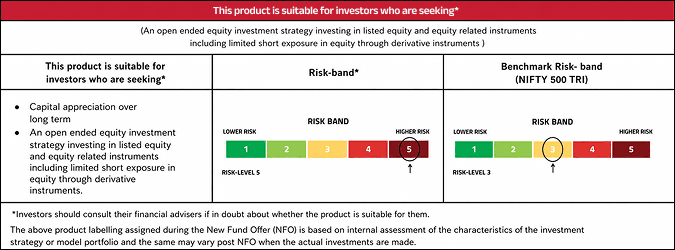
The Apex Equity Long Short Fund may be considered as a supplementary allocation rather than the foundation of a portfolio. It may suit experienced investors who:
- Understand equity and derivative risks
- Have a relatively high risk tolerance
- Can remain invested over the long term
- Already have a diversified core portfolio
- Are comfortable with strategy-specific and fund-manager risk
It may not suit investors seeking capital protection, predictable income or short-term liquidity.
Assess the Strategy Before Allocating
An equity long short fund offers a more flexible approach to equity investing by combining long positions with limited short exposure. This flexibility also makes the product more complex than a traditional long-only fund.
Blog Disclaimer:
The information herein is meant only for general reading purposes, and the views being expressed only constitute opinions and therefore cannot be considered as guidelines, recommendations or a professional guide for the readers. The document has been prepared on the basis of publicly available information, internally developed data, and other sources believed to be reliable. Recipients of this information are advised to rely on their own analysis, interpretations & investigations. Readers are also advised to seek independent professional advice in order to arrive at an informed investment decision.
SIF Disclaimer:
Investments in Specialized Investment Fund involves relatively higher risk including potential loss of capital, liquidity risk and market volatility. Please read all investment strategy related documents carefully before making the investment decision
SEBI Registration No. MF/020/94/8
FAQs
What is an Equity Long Short Fund?
It is a SIF strategy that combines long equity investments with limited short positions created through permitted derivatives.
How does a long-short equity strategy work?
It buys securities expected to perform well and may short securities or indices expected to underperform.
Are Equity Long Short Funds suitable for beginners?
They may not suit beginners who do not understand derivatives, short positions and active portfolio risks.
How is it different from a traditional equity mutual fund?
Traditional equity funds are mainly long-only, while equity long-short funds can also take limited short exposure.
What are the risks associated with Equity Long Short Funds?
Risks include market volatility, incorrect stock selection, derivative losses, liquidity constraints and ineffective hedging.
How are Equity Long Short Funds taxed in India?
Equity-oriented strategies generally attract 20% STCG tax and 12.5% LTCG tax above the applicable annual exemption. Please refer ISID for complete information. (IncomeTaxIndia)
Can an Equity Long Short Fund generate returns in volatile markets?
It may capture relative opportunities, depending on market conditions, but positive returns are not assured.
Who should invest in an Equity Long Short Fund?
It may suit informed, higher-risk investors with a diversified portfolio and a long-term investment horizon.
How does the Apex Equity Long Short Fund manage market volatility?
Its draft structure permits listed equity investments and limited short exposure through derivatives, subject to the final offer documents.
What investment horizon is suitable for an Equity Long Short Fund?
A long-term horizon may be appropriate because short-term results can be affected by market cycles and strategy execution.


 7 Min Read